Where the money went, and why you cannot remember
The month ends smaller than expected. It is rarely overspending — it is usually no record of the small things.
The feeling that money disappeared is almost never about one big purchase. Big ones you remember. It is about forty small ones you never had a reason to notice.
Banks do not help as much as they look like they do. Their categories are built for them, not for you: a coffee shop and a supermarket are both “retail”, and a taxi to the airport sits beside a taxi to the bar.
Start with one month, not with a system
Take last month and sort it once by hand. Not into twenty categories — into four or five you would actually use. The point is not the numbers. The point is that you will recognise two or three patterns you did not know you had.
The number that matters is not the total
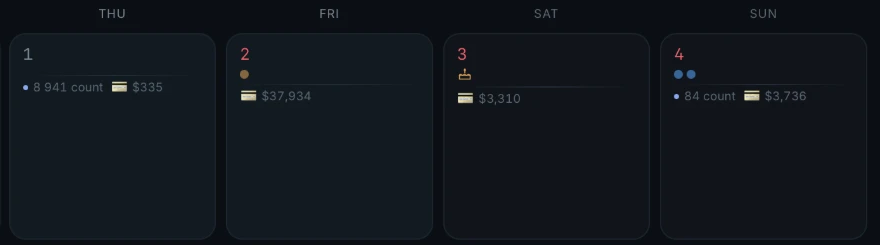
A monthly total tells you nothing you can act on. What you can act on is the daily pace: how much a day you are running at, and how much a day is left if nothing changes. One of those two numbers is a fact, the other is a forecast, and confusing them is how budgets get abandoned.
Where it helps to have a space
Money here reads your statement or a screenshot of your bank feed and checks itself against the totals the bank printed. If the sum does not add up, it says so instead of quietly showing a smaller number.