Why you stop opening the tool you chose
The problem is almost never the app. It is the distance between where you are and where the app is.
Everyone has an app graveyard: three task managers, two note apps, one budget tracker used for eleven days. The usual explanation is discipline. The usual truth is distance.
An app you must remember to open is an app you will stop opening. Not because it is bad — because remembering is itself a task, and it is the first one to be dropped.
Judge a tool by what it asks, not what it offers
Before features, count the asks: how many times a week must you come to it, how much must you type, how much must you maintain for it to stay true. A tool that asks for daily upkeep needs to pay back daily.
The connected ones survive
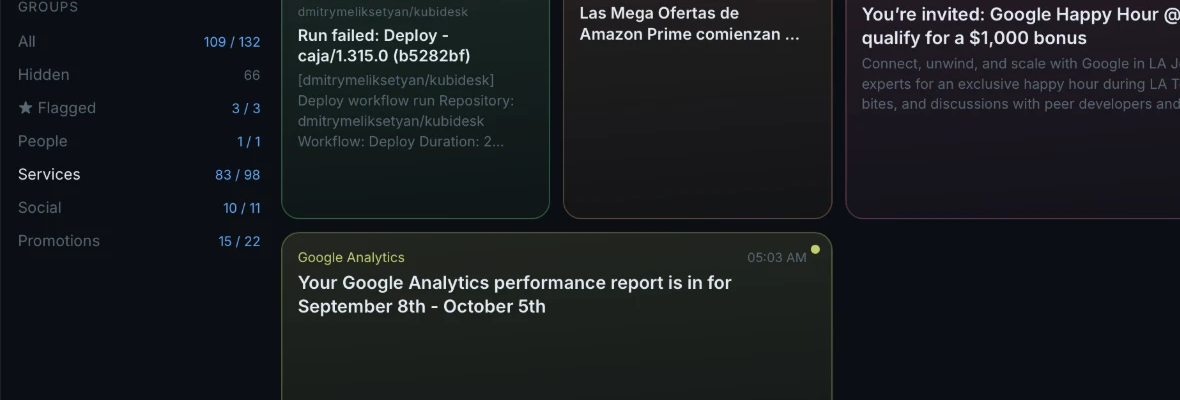
Tools that read something on their own outlive the ones that wait to be fed. A step count that arrives by itself, a statement that parses itself, a calendar that pulls from where meetings already land — each one removes a reason to forget.
Where it helps to have a space
That is the whole bet here: fewer places, and the ones that are left should fill themselves where they can. Connectors are not a feature list — they are the reason the space is still accurate a month after you set it up.